Home-brewed coffee
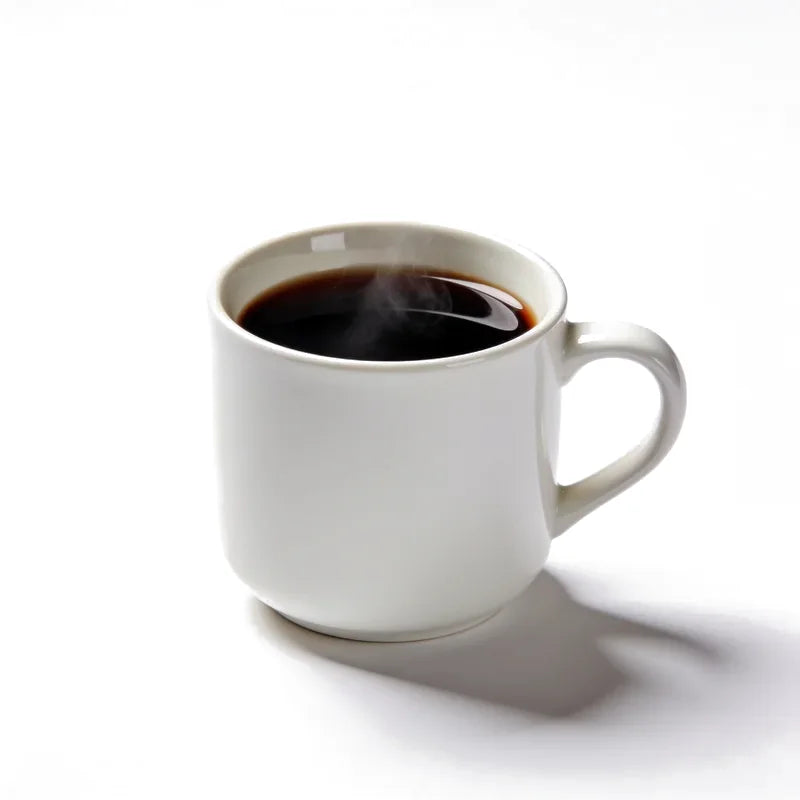
About 95 mg in an 8 fl oz (240 ml) mug by USDA values; EFSA uses about 90 mg for a 200 ml cup. A strong brew or a big mug holds more.1,3
Coffee is the world's most popular daily ritual for getting caffeine, at home, on the go or at your desk. This page compares three everyday formats, a mug of home-brewed coffee, a Starbucks Caffè Latte (Tall) and a Nespresso Original capsule, with an SZN caffeine pouch on the things that actually change when you switch: the caffeine dose, sugar and calories, teeth staining, acidity, timing and cost. Where coffee does something well, we say so.


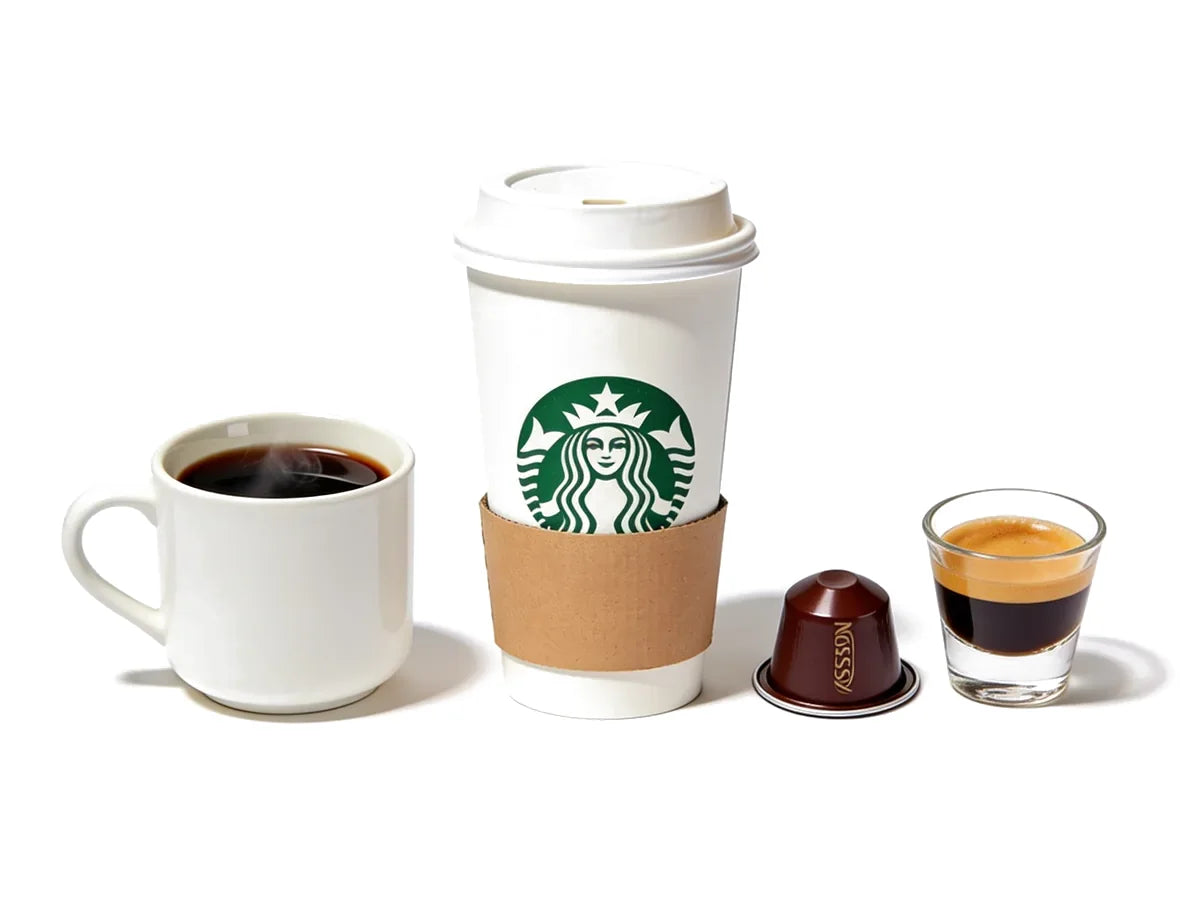
Home brewMug, ~240 ml
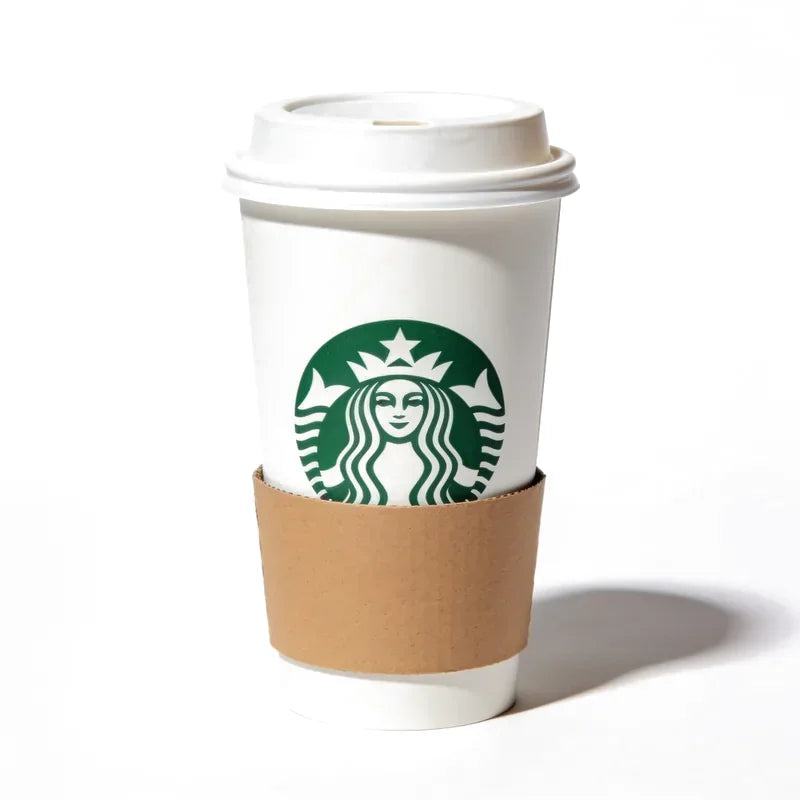
Starbucks latteTall, 354 ml
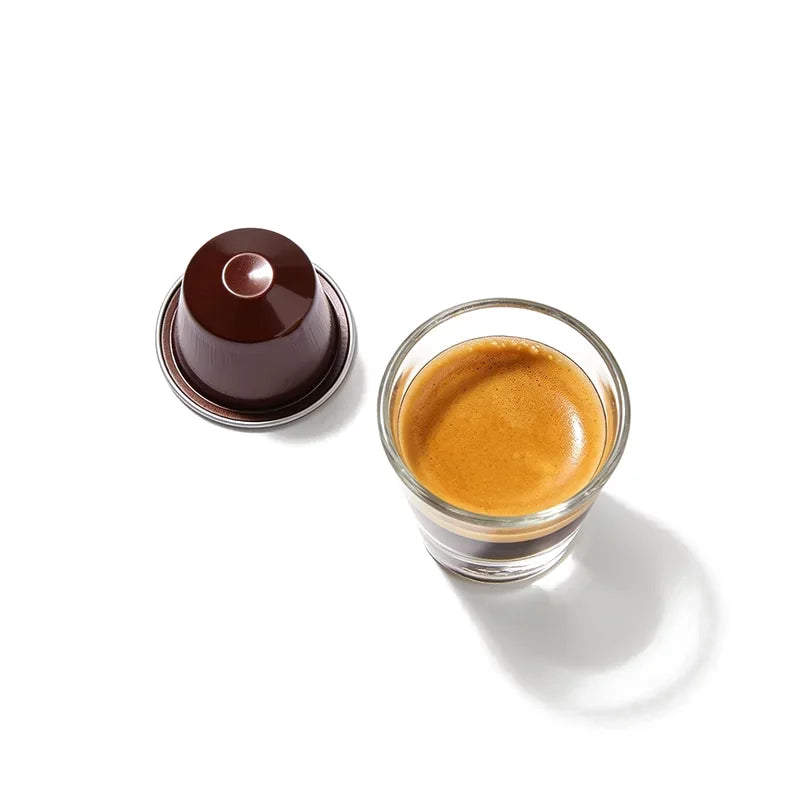
NespressoOriginal, ~40 mlThe caffeine in an SZN pouch is the same molecule found in coffee beans. In brewed coffee, the amount varies with the bean, the roast, the grind and the extraction, so the coffee figures below are typical values. SZN provides a fixed, lab-verified 100 mg dose: the pouches are made in a factory with 10 years of pouch production, and production is tested regularly by Eurofins, an independent laboratory.6

About 95 mg in an 8 fl oz (240 ml) mug by USDA values; EFSA uses about 90 mg for a 200 ml cup. A strong brew or a big mug holds more.1,3

75 mg in a Tall, which Starbucks gives as an approximate value. The caffeine comes from the espresso; the rest of the cup is milk.7

Nespresso says its coffees contain roughly 60–90 mg per cup, depending on the blend, the share of Robusta and the extraction; a few blends go above 100 mg.8

The same 100 mg in every pouch, every flavour, from a factory with 10 years of pouch production, tested regularly by Eurofins.6
How much is too much? EFSA considers up to 400 mg of caffeine a day, and single doses up to 200 mg, safe for healthy adults.2 That is four SZN pouches, and the limit covers caffeine from every source, so count your coffee too: two mugs of home brew (about 190 mg) plus two pouches (200 mg) is already about 390 mg. Max 4 pouches a day. Not for children, pregnant or breastfeeding women, or people sensitive to caffeine.
Measured values first, then the practical differences you notice day to day. Home brew and Nespresso figures are for black coffee; the Starbucks latte is the standard recipe with 2 % milk. A tick marks a clear difference on that row; most rows are simply different, not better or worse.
| SZN1 pouch | Home brew~240 ml mug | Starbucks latteTall, 354 ml | NespressoOriginal, ~40 ml | |
|---|---|---|---|---|
| Measured values | ||||
| Caffeine per serving1,3,7,8 | 100 mg | ~90–95 mg | ~75 mg | ~60–90 mg |
| Cost per 100 mg caffeine13–15 | From $0.41 | ~$0.17–0.28 | ~$6.00–7.35 | ~$0.80–1.85 |
| Caffeine consistency6 | The same 100 mg in every pouch | Varies with bean, grind, strength and mug | Standard recipe, approximate value | Varies by blend |
| Sugar per serving3,7 | 0 g | 0 g, black | 14 g, from the milk | 0 g, black |
| Calories per serving3,7 | 0 kcal | ~2 kcal, black | 150 kcal | ~2–4 kcal, black |
| B-vitamins3,4 | B1, B5, B6, B12 added | Small amount of niacin (B3) | B2 and B12 from the milk | Some niacin (B3) |
| Teeth staining10,12 | Doesn't stain teeth: white, tannin-free | Common cause of stains | Contains coffee pigments | Common cause of stains |
| Acidity9,12 | pH-neutral | Acidic (~pH 5) | Acidic espresso (~pH 5), mixed with milk | Acidic (~pH 5) |
| Dose verified by a lab6 | Yes · Eurofins | No | Approximate value stated | Range stated |
| Day to day Practical | ||||
| How you take it | Under the upper lip, nothing to drink | Drink it, hot or iced | Drink it, hot or iced | Drink it, hot |
| Fast acting2,12 | Typically within 5 minutes | Typically 20–30 minutes | Typically 20–30 minutes | Typically 20–30 minutes |
| Release | Releases caffeine for up to 90 minutes | Absorbed from the gut once you drink it | Absorbed from the gut once you drink it | Absorbed from the gut once you drink it |
| Portability | 15 per pocket-sized can | Mug or thermos, needs a brewer | One cup, from a café | Needs the machine |
| Discretion | Out of sight, hands free | A mug in hand | A café cup in hand | A cup in hand |
| Contact with teeth9,10,12 | White pouch, not acidic on enamel | Sipped over the teeth, acidic and pigmented | Sipped over the teeth, contains coffee | Sipped over the teeth, acidic and pigmented |
| Taste & ritual | Four flavours: Original, Mint, Citrus, Peach | A warm mug many people love | A milky café drink, many variations | A quick espresso, many blends |
Black home-brewed coffee and a Nespresso espresso contain no sugar and only a couple of calories per cup.3 A Starbucks Caffè Latte is mostly milk: a Tall made with the standard 2 % milk has 150 kcal and 14 g of sugars, which come from the milk's own lactose, before any syrup.7 Sugar, syrups and creamers added to any coffee add more.
An SZN pouch contains no sugar, no dairy and no calories. It is not a drink, so there is nothing to add and nothing to count beyond the caffeine.
Caffeine you drink is swallowed and absorbed from the gut, and blood levels typically peak within about an hour.2 That is the same for a mug of home brew, a Starbucks latte or a Nespresso espresso. How fast you drink it is up to you, and most people notice a cup after 20–30 minutes.
An SZN pouch sits under your upper lip, where you typically notice it within 5 minutes, and it releases its caffeine for up to 90 minutes.12 The caffeine is taken up through the lining of the mouth, and the pouch itself is never swallowed, so the product does not pass through the stomach the way a drink does; a little caffeine is swallowed with saliva. You decide how long it stays in, and you can take it out sooner.
Once caffeine is in your system, your body handles it the same way whatever the source. Its half-life in healthy adults is several hours and differs a lot from person to person. EFSA notes that 100 mg close to bedtime can affect sleep in some adults, so treat an evening pouch like an evening espresso.2
Swallowed with 40–354 ml of liquid, then absorbed from the stomach and small intestine.
Taken up through the lining of the mouth from a pouch under the lip. Nothing to drink and nothing for your stomach to digest.
Black coffee contains a little niacin (B3) and no meaningful amounts of other B-vitamins.3 Credit where due for the latte: the milk in a Tall supplies a real share of vitamin B2 (riboflavin) and vitamin B12, roughly 30–40 % and 65 % of the EU reference intake by our estimate from USDA milk values.3,5 SZN adds four B-vitamins to every pouch: B1, B5, B6 and B12.
Coffee is mildly acidic: a laboratory study of hot-brewed coffees measured pH values between 4.85 and 5.10.9 It also contains strongly coloured pigments, called chromogens, that attach to the outer enamel, and the American Dental Association names coffee, along with tea and red wine, as a source of these stains.10 In a latte the espresso is mixed with milk, but it is still coffee you sip over your teeth.
Coffee can also bother some people's stomachs: the U.S. National Institute of Diabetes and Digestive and Kidney Diseases lists coffee and other sources of caffeine among the foods and drinks commonly linked to reflux (GER and GERD) symptoms in some people.11 Caffeine is on that list whatever the source, SZN included, so if caffeine bothers your stomach, that applies to every option on this page.
An SZN pouch is white, tannin-free and pH-neutral. It doesn't stain teeth and is not acidic on enamel.12 The pouch stays under the lip and is never swallowed, so there is nothing to drink and nothing for your stomach to digest.
Acidic (~pH 5) and pigmented. Sipped over the teeth, often several mugs a day.
Espresso softened with milk, but still coffee pigments, plus 14 g of milk sugars per Tall.
A small, concentrated espresso: acidic (~pH 5) and pigmented, finished in a few sips.
White, tannin-free and pH-neutral. Doesn't stain teeth, not acidic on enamel, and never swallowed.
One SZN can is $12 and holds 15 pouches, 1,500 mg of caffeine in all. Getting the same caffeine from Nespresso Original takes about 17–25 capsules, roughly $12–27.50 at typical US prices; from Starbucks it takes 20 Tall lattes, about $90–110. Buy SZN in the 24-can Mix & Match bundle and the same 1,500 mg costs about $6.15. Home brew is the one that beats SZN on price: about 16 mugs for $2.60–4.30, if you have the beans, the brewer and the time.13–15
The honest read: against Starbucks and Nespresso, SZN wins clearly. A Tall latte costs about 15–18 times SZN's bundle price per 100 mg of caffeine, and adds 150 kcal and 14 g of milk sugars; a Nespresso capsule costs about two to four and a half times as much, and needs the machine. Even SZN's single-can price matches the cheapest Nespresso capsules. Home-brewed coffee is cheaper per 100 mg than any pouch, but it needs beans, a brewer and a few minutes every time, and it doesn't travel in your pocket.
Home brew is cheap, a latte is a treat and a Nespresso is quick, and coffee is a ritual many people would never give up. SZN gives you a fixed 100 mg dose with no sugar, no calories and nothing to drink, in a white, pH-neutral pouch that doesn't stain teeth, and it costs a fraction of a café latte. Plenty of people use both: a cup in the morning, a pouch when a cup isn't practical.